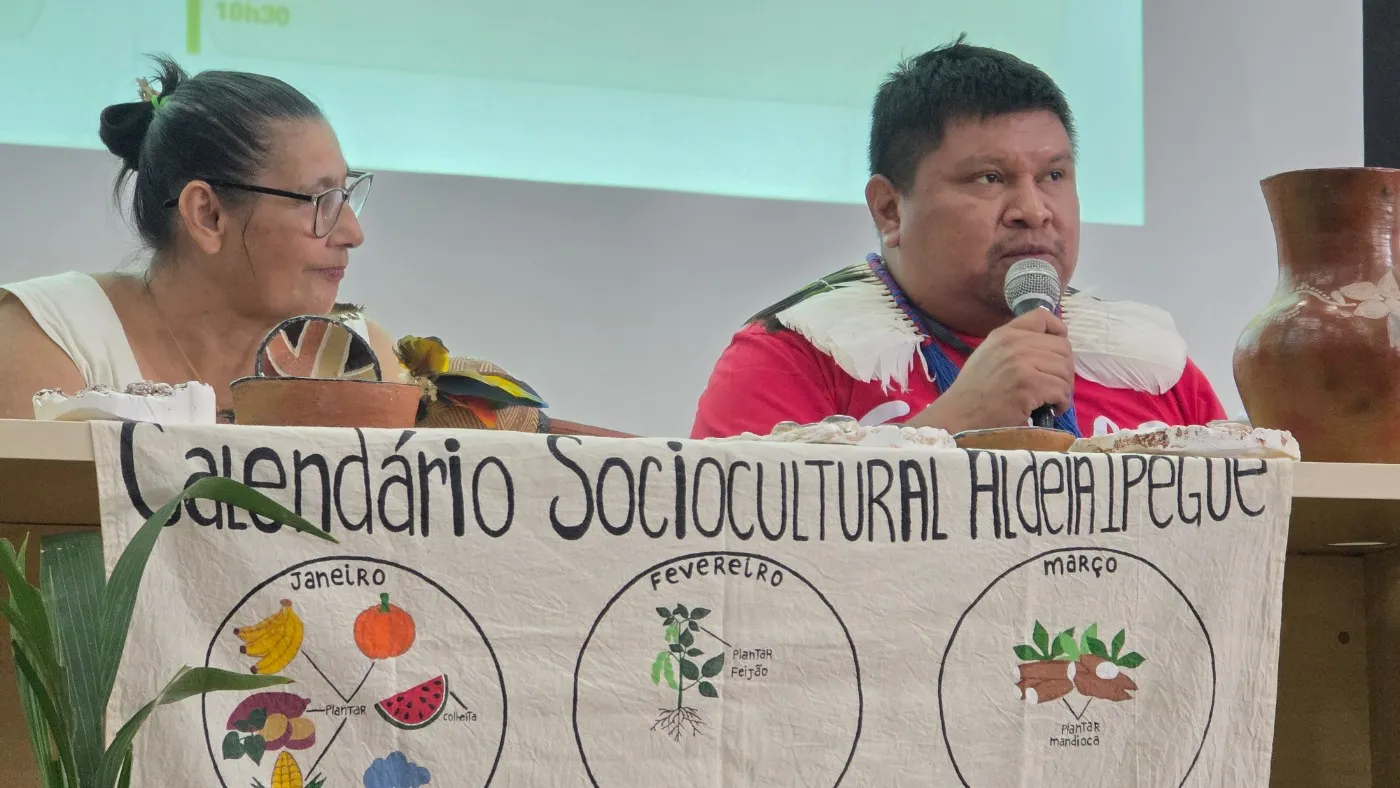
The Comitê de Cultura in MS participates in the 2nd National Meeting on Indigenous Agroecology with activities aimed at promoting traditional knowledge
The Mato Grosso do Sul Comitê de Cultura will participate in the program for the 2nd National Indigenous Agroecology Meeting from November 20 to 22...
The Mato Grosso do Sul Comitê de Cultura, from November 20 to 22, is participating in the program for the 2nd National Indigenous Agroecology Meeting (Enai), organized by its partner organization, Organização Caianás. Held at Aldeia Mãe Terra, located in the Cachoeirinha Indigenous Territory in Miranda (MS), the meeting brings together Indigenous leaders, institutional representatives, researchers, and communities from different territories for three days of activities focused on valuing ancestral knowledge, food sovereignty, environmental preservation, and strengthening public policies for Indigenous peoples.
The program includes panel discussions, workshops, and opportunities to exchange experiences that bring together traditional practices, cultural expressions, and discussions on the challenges faced by Indigenous communities. The goal is to strengthen dialogue among different peoples and institutions, recognizing the leading role of Indigenous peoples in building sustainable alternatives and protecting their territories.
The indigenous environmental collective “Action for Nature, Agroecology, and Sustainability” — Caianás, an organization that is part of the network of the Ministry of Culture’s National Program of Culture Committees (PNCC), will carry out a series of initiatives, contributing to activities that highlight traditional knowledge and underscore the relationship between culture, territory, and agroecology.
In addition, the Comitê de Cultura in MS will also have an information booth, providing information and assistance with registering cultural agents on the Mapa da Cultura, as well as answering questions about funding mechanisms.
Among the highlights of the first day, Friday (the 20th), are discussions on the challenges of achieving convergence among indigenous policies aimed at promoting health, food sovereignty, and combating climate change. From 1:30 p.m. to 2:30 p.m., the panel dedicated to the National Policy on Territorial and Environmental Management of Indigenous Lands (PNGATI) and the National Policy on Health Care for Indigenous Peoples (PNASPI) will feature Mateus Tremembé, João Leôncio, from the Caianás Organization; Bruno Potiguara, from the National Secretariat for Indigenous Environmental and Territorial Management (Segati) of the Ministry of Indigenous Peoples; Juliana Duarte, from the National Foundation for Indigenous Peoples (Funai); and Francimar Bezerra, from the Roraima District Council for Indigenous Health (Condisi-RR).
Next, from 2:30 p.m. to 3:10 p.m., the session “The Force That Feeds – Agroecological Revolution Led by Indigenous Women” will highlight the leading role of women in the preservation of territories, food production, and the continuation of traditional agroecological practices. Moderated by Lina Apurinã, the session brings together Val Eloy, Maria Xavier, Juliana Duarte from FUNAI, Maria Belizário, a teacher and leader from Aldeia Mãe Terra, Luzimeth Muniz Pataxó Hã-Hã-Hãe, and Nândesy Roseli Guarani Kaiowá.
Also on Friday, from 3:10 p.m. to 4:40 p.m., the program includes activities focused on the exchange of ethno-agroecological experiences and their intersections with public policy. Among the topics covered are the leading role of Indigenous women in agroecology, with Cris Truká, and access to water, sanitation, and solid waste management, with Gilmara Terena and Neiriel Terena. These discussions promote the sharing of knowledge and experiences related to sustainability, the protection of rights, and the empowerment of Indigenous communities.
During the same period, the program includes the Kinikinau Pottery workshop, led by Dielen Kinikinau, which showcases the traditional knowledge and techniques of this people, highlighting the importance of passing down knowledge and preserving indigenous artisanal practices. Also part of the activities is the Ancestral Seeds workshop, led by Cidrão Lima Lopes, which addresses the importance of traditional seeds for the preservation of biodiversity, the continuity of knowledge passed down through generations, and the food sovereignty of communities.
The official opening of the 2nd National Indigenous Agroecology Meeting will take place on Friday (20), from 7:30 p.m. to 9:30 p.m., bringing together participants, Indigenous leaders, and representatives of the organizations involved in a moment of social mobilization and strengthening of agendas related to the rights and territories of Indigenous peoples.
Culture, Ancestry, and the Transmission of Knowledge
On Saturday (21), cultural activities take center stage with workshops that bring different generations together and strengthen the appreciation of Indigenous identities.
From 8:30 a.m. to 11:30 a.m., the craft workshop “Kalihuti Vôûti, Hãnaíti Exone – Small Hands, Great Knowledge,” led by Silviane Albuquerque, Flaviane Oliveira, and Ana Luiza Muchacho, will provide a space for learning and sharing artisanal practices, emphasizing the importance of transmitting traditional knowledge and strengthening intergenerational bonds.
In the afternoon, from 2:30 p.m. to 5:30 p.m., the arts workshop “Poké'exa Ûti, Ovoku Vexetina – Our Land, Our History” will be held, featuring Dailaine Sebastião, Lucinelne Lipu, and Juliane Muchacho. The activity highlights art as an expression of memory, identity, and the relationship between Indigenous peoples and their territories, valuing cultural expressions and the knowledge passed down through generations.
On Sunday (the 22nd), the final day of the event, the program begins with the roundtable discussion “Dimensions of Indigenous Good Living: Territory, Spirituality, Health, and Agroecology,” from 8:00 a.m. to 9:30 a.m. The event brings together Chief Renata Tupinambá, Edna Truká, Patricia Tumbalalá, Eliel Guarani Kaiowá, João Leôncio, Catarina Guató, and Genilson Kinikinau to discuss the different dimensions of good living and the relationship between territories, ancestral knowledge, spirituality, and the quality of life in Indigenous communities.
Also in the morning, from 8:30 a.m. to 11:30 a.m., Dina Sebastião and Alessandra Albuquerque will lead the workshop “Ovoku Ipune Têrena – Terena Pottery,” dedicated to highlighting one of the cultural expressions of the Terena people. The activity highlights the preservation of artisanal techniques and the transmission of traditional knowledge as fundamental elements for the continuity of cultural memory and identity.
Another highlight of the final day is the knowledge exchange “The Right to Healthy Food and Strategies for Coping with Extreme El Niño,” featuring Aislan Vieira de Melo. The event addresses the challenges posed by climate change and the importance of strategies to ensure food security and sovereignty for Indigenous populations, bringing together traditional knowledge and initiatives to combat the environmental impacts affecting the territories and ways of life of Indigenous peoples.