
People with disabilities call for effective access to culture at the CCMS Seminar
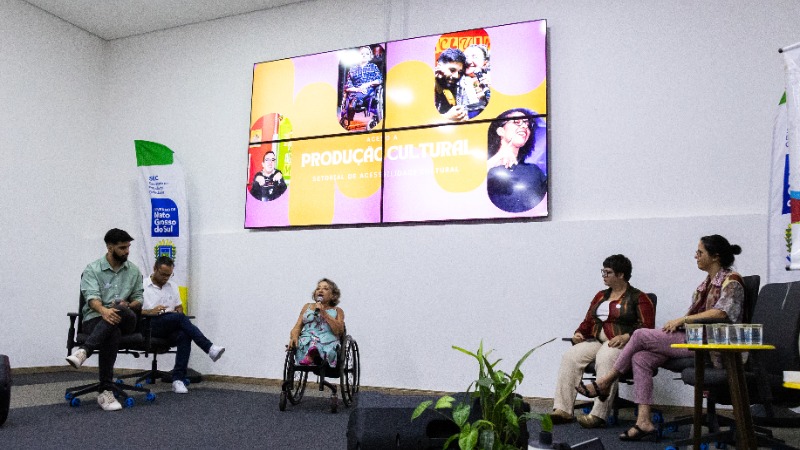
Voices reflecting personal experience and activism were a highlight of the “Accessible Culture” seminar organized by the Mato Grosso do Sul Comitê de Cultural (CCMS) and the Subsecretariat for People with Disabilities in Campo Grande
More than just a technical debate, the seminar “Accessible Culture, Flourishing Citizenship” served as a platform for a direct appeal: for culture to belong to everyone, it must be accessible in practice.
The event, held on Tuesday (Sept. 30, 25), highlighted that, for people with disabilities, participation in artistic movements and access to historic sites is not a matter of willingness, but of feasibility.
Taisa Santos da Silva, 46, who is readjusting to life after losing her sight, participated in a discussion on the topic for the first time and demonstrated how assistive technologies can be transformative. “I’m relearning how to live with my vision loss. It’s been seven years. This is the first time I’ve attended an event like this. Yeah, there always has to be audio description, right? So we can participate more, right? There has to be accessibility in general. Ivone [the audio describer] did a wonderful job providing audio description for us; she gave us a lot of attention. I was happy; I felt truly cared for. So, the organizers also need to be more involved; they need to be present at future events so they can experience it firsthand a little bit and understand our suffering,” she said, visibly moved.
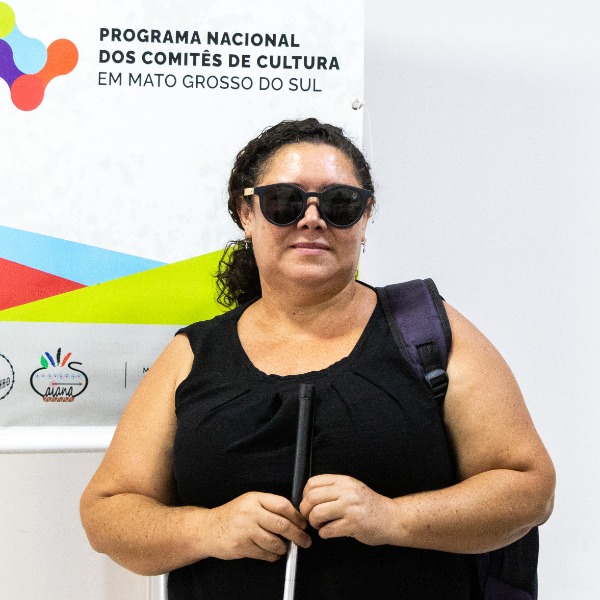
Elevating the debate from the realm of need to that of legislation, 59-year-old para-athlete Edivanda Diniz Aires was emphatic in questioning why cultural spaces remain empty of an audience that exists and has the right to be there. “Statistics were also presented on the number of people with disabilities. Why is it that these people with disabilities—whether physical, visual, or intellectual—why don’t they participate in cultural events? [...] And why aren’t people with visual impairments part of the cultural scene? Because there’s no accessibility! So it’s not because people don’t want to go to the theater, don’t want to go to the movies, or don’t want to go to a restaurant,” she said.
For the para-athlete, this absence highlights a fundamental flaw in the system, since accessibility is the basic requirement. “A lack of accessibility means a lack of inclusion. So there’s no way to say that inclusion exists when there’s no accessibility. Accessibility is a bridge to inclusion. If there’s no accessibility, there’s no way to include people,” she said.
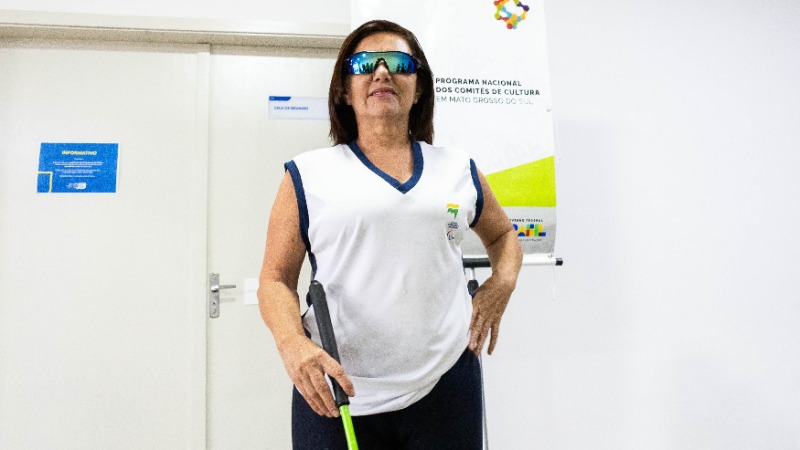
Aires also pointed out the mismanagement of funds allocated to this cause, which often exist only on paper but fail to translate into actions that address the diversity of disabilities. “It was made very clear here that 10% of the budget [from the Aldir Blanc National Policy] allocated to culture is directed toward accessibility and inclusion. But that doesn’t happen, does it? [...] Because when a theater only accommodates people who are congenitally totally blind—with Braille, for example—aren’t you excluding all other people with disabilities, all other forms of visual impairment, such as low vision or those who have become totally blind later in life? No! The same goes for the deaf. “There’s a huge percentage of deaf people who don’t know Brazilian Sign Language,” she protested.
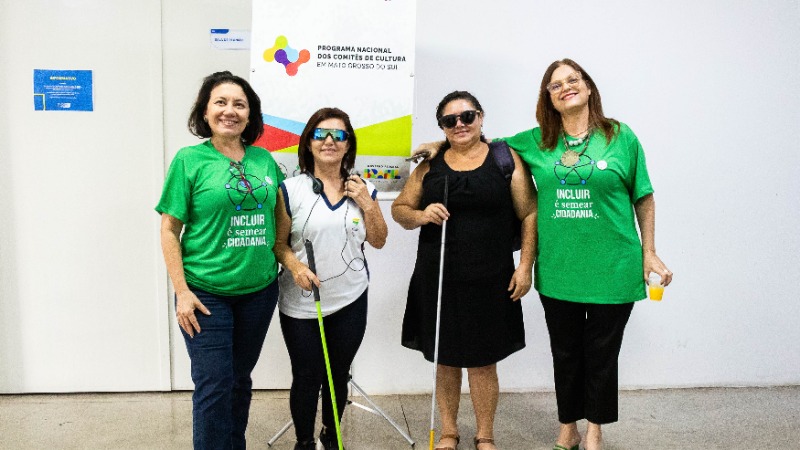
That’s why she pointed out that the struggle isn’t for compassion, but for a guaranteed right. “So there have to be other types—we need to offer other types of accessibility—and I’ll say it again: the resources will come. So, it has to happen, and it’s not a matter of dignity; it’s a matter of rights. We don’t need to add to our dignity. We already have dignity; we’re here to demand the right to accessibility and inclusion,” the athlete added.
The seminar was designed precisely to serve as this channel for dialogue.
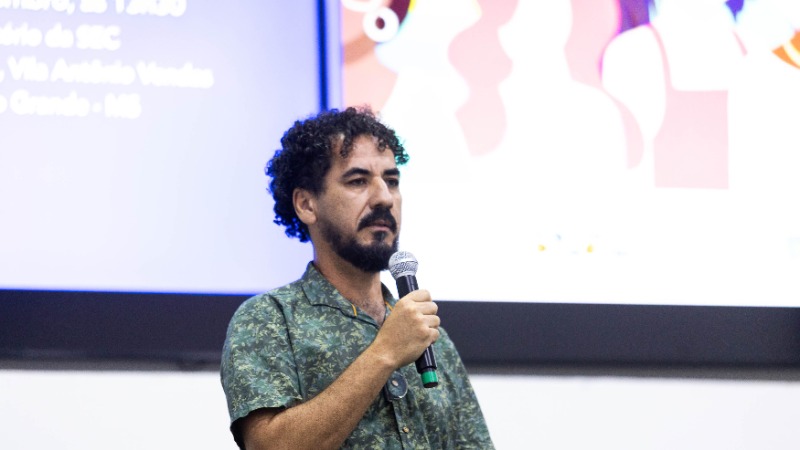
According to Anderson Lima, president of the organization Flor e Espinho, which runs the Mato Grosso do Sul Culture Comitê de Culturat (CCMS), the goal was to listen in order to develop solutions. “We’re here to listen, to provide a space for those who truly have a voice to be heard, to identify the issues, and to devise solutions together with government officials. To reflect on this new phase that public policies are undergoing in Brazil,” he explained.
The message was received by government officials. Malu Fernandes, Undersecretary of Public Policies for People with Disabilities, called the event a “watershed moment.” “There has never been an event at the Secretariat of Citizenship to discuss culture and accessibility; this is a topic that hasn’t yet resonated with people. People with disabilities still feel uncomfortable when the topic is culture,” she noted.
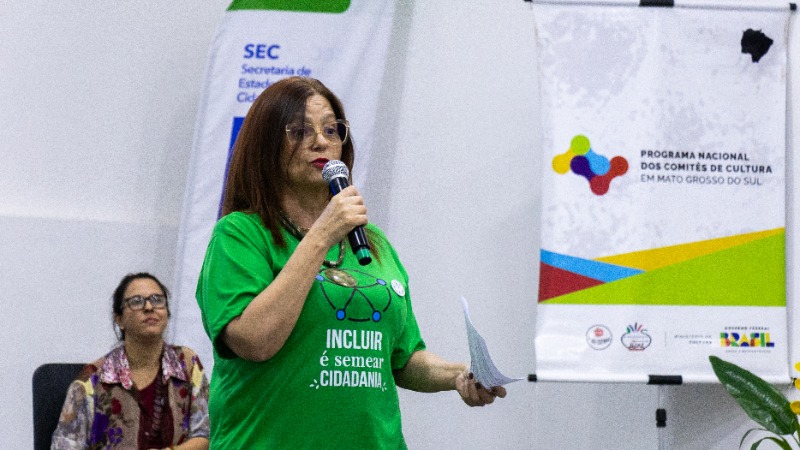
For the official, the solution goes beyond funding or legislation itself; it requires a shift in mindset. “What good is culture if it isn’t for everyone? It has no meaning. [...] It goes beyond financial resources; it goes beyond the law, because raising awareness and fostering a sense of belonging among people with disabilities [...] are worth so much more—they have far greater value and scope than the law itself, than the resources themselves,” she argued.
Fernandes acknowledged that the journey is a long one and that partnering with civil society is crucial to regaining the community’s trust. “Unfortunately, people with disabilities do not believe in public policies for culture. We’re going to have to win them over, and that is our intention, our desire—and I think today was just the first step on a long journey.”
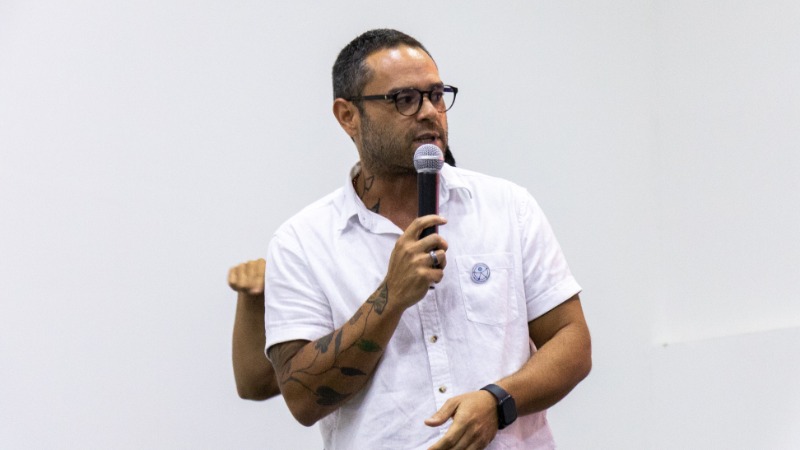
One of the biggest practical challenges discussed was the adaptation of historic heritage sites. João Henrique dos Santos, superintendent of IPHAN-MS, stated that the remarks made at the seminar were “a foot in the door and a slap in the face”—a wake-up call highlighting the urgency of the issue. “It’s essential that we think about accessibility right now—at this very moment, when we’re designing an architectural project. We must remember that the project itself—what precedes construction—is the design. And we, as architecture professionals […], are the ones who will solve these problems right there in the design phase,” he argued.
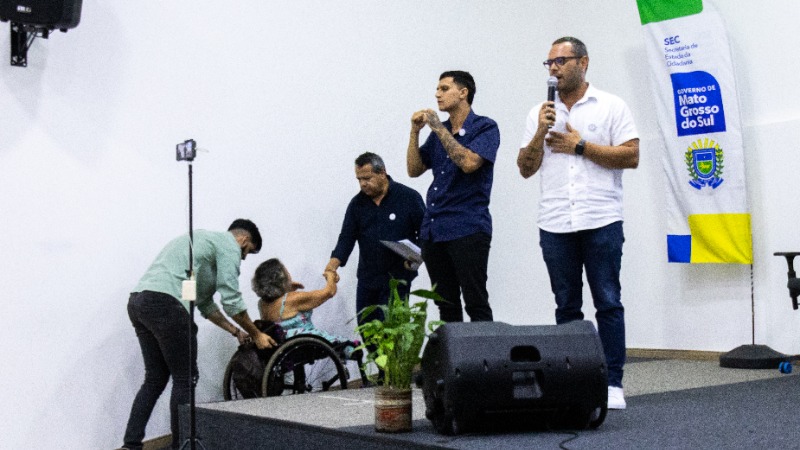
One of the representatives of the Sectoral Council that advocates for Inclusive Cultural Public Policies and a Sense of Belonging for People with Disabilities in Mato Grosso do Sul and president of the Association of Women with Disabilities of Mato Grosso do Sul, Mirella Ballatore, denounced that the very venue where the seminar on accessibility was being held is not an accessible space. “For us to have access to culture—in my case, as a wheelchair user—I need true access. This place here doesn’t give me true access. The engineer, the architect, the mason—the person who designed this ramp—doesn’t know what accessibility is. I’m up here because someone helped me get up and will help me get down. I don’t want help, not even to go to the bathroom. Here, the restroom isn’t truly accessible. I can’t see myself in the mirror, and I believe a person with dwarfism couldn’t either,” stated Mirella.
She explained that, as a person with a rare disease (Osteogenesis Imperfecta—OI; commonly known as brittle bone disease), she cannot take risks in environments that lack accessibility. “I have a rare disease, and I can’t afford to fall and get hurt. It’s not the governor, the mayor, or the secretary who will take care of me. They’re all temporary, and we’re here to stay. I’m tired of telling them to fix this ramp. If I need help, I know I’ll get it, but I don’t want help—I want accessibility,” she added.
The superintendent of IPHAN called on other administrators to adopt this broader perspective, with an eye toward the future legacy. “We can’t think about cultural heritage today—which is a tangible legacy that we promote, protect, and preserve for future generations—without also ensuring accessibility for those future generations, right?”
The dilemma is a real one for urban planners, as explained by architect Jacqueline Nascimento of Planurb, who is working on revising the capital’s legislation. “We can’t destroy heritage sites just to make a building accessible, but we also have to make the building accessible […]. There’s no point in having a beautiful building that stands there isolated because no one can get inside due to a large staircase, right? So, we’re drafting legislation to address precisely this issue,” she concluded.