
MS Comitê de Cultural Promotes Projects by Indigenous Artists
Free technical assistance increases indigenous representation in PNAB calls for proposals
The Mato Grosso do Sul Comitê de Cultural is redefining access to public policies for cultural workers in the state through the “Propulsão Cultural” program. The initiative offers free technical assistance to artists, producers, and cultural practitioners, with a focus on preparing projects for funding calls, such as those under the Aldir Blanc National Policy (PNAB).
In the state, the program has already served 70 people, resulting in the submission of 66 projects and the approval of 35 proposals in completed funding calls—a milestone in the democratization and strengthening of the sector.
“Propulsão Cultural” was designed to train cultural agents, strengthen their technical skills in project development, and promote inclusion and diversity. The methodology, developed in partnership with the Digital Culture Laboratory (LabCD) at the Federal University of Paraná (UFPR) and the Paraná Culture Committee (Comitê de Cultura), is structured around the pillars of mobilization, technical training, and communication. Activities range from mapping the needs of applicants to conducting specialized technical reviews of proposals, ensuring greater competitiveness.
The results demonstrate a significant impact on the diversity of the recipients. The profile of the audience served reveals a majority of women (65%) and strong representation of marginalized groups, which make up 57.15% of the applicants. Among them, 32.86% identify as Black or mixed-race, and 24.29% are Indigenous, representing communities such as the Terena, Pantaneiros, and Guarani Kaiowá.
THREE SUCCESS STORIES
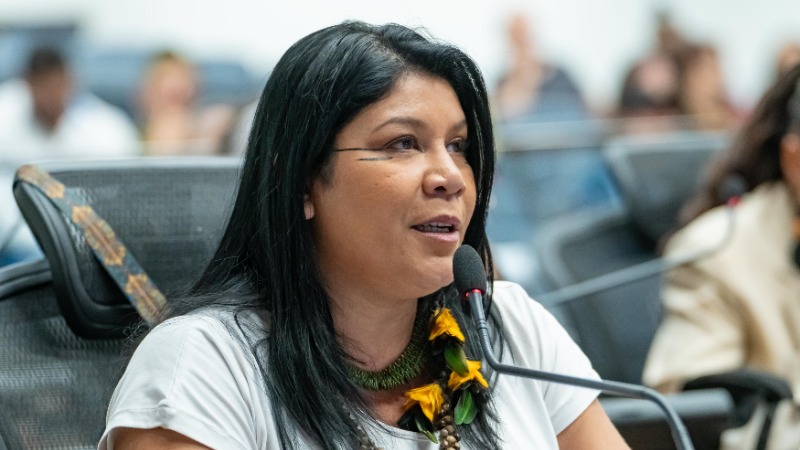
The program’s effectiveness is evident in success stories such as those of cultural producers Gleycielli Nonato and Catarina Guató, who, with the Committee’s support, overcame technical barriers and secured approvals in multiple calls for proposals.
Active in the fields of audiovisual media, literature, and Indigenous cultures, Gleycielli Nonato turned to Propulsão Cultural to refine her projects. The Committee’s team provided close guidance, with technical support beginning in December 2024. Detailed reviews were conducted on two proposals she was developing. The result: approval in four distinct calls for proposals—Indigenous Agents and Collectives (Call 10/2024), Women-Directed Audiovisual Projects (Call 18/2024), Audiovisual (Call for Proposals 22/2024), and Cultural Grants (Call for Proposals 04/2025).
Gleycielli celebrated the opportunity to have access to specialized technical guidance locally. “I loved having support throughout the entire project development process: the spreadsheet, objectives, justifications, and finding the right words to fit the texts. It was really helpful to go over the details and read the call for proposals carefully,” she said.
According to her, this kind of support is essential, especially for those from historically marginalized communities. “This was extremely necessary for people from rural areas, Indigenous communities, and Quilombola communities—those on the margins who need this kind of guidance. People often say, ‘Oh, let’s offer a course on how to develop projects,’ but then they don’t follow up. And that follow-up is necessary. It’s not as simple as, ‘Let’s offer a course,’ and then the person walks away knowing everything,” she noted.
Gleycielli advocates for ongoing technical support. “This support needs to continue over time, throughout the entire process, so that the project is submitted in a polished, well-crafted, and well-developed manner. I’m very grateful, because if it weren’t for this follow-up, I don’t think I would have achieved the positive results I did. I ranked among the top entries in several projects—and it was thanks to this technical support. That’s essential,” she added.
She also commented on the direct outcomes of the process. “One film [that I approved] is called *Mapago*; it’s a short film. The other is called *Carne Amarela*; it’s also a short film—it was filmed in Coxim,” she said.
In addition, she applied the knowledge she gained to other areas. “For the other project—the municipal one—I also drew on all the work they did with me, the support they gave me, and the empowerment I received, to apply it to the Municipal PNAB as well. So, the Municipal PNAB was also developed with that support. The municipal project is called *A Trovadora e o Poeta*. But I also applied for the research grant—the one to study the worldview of my Guató people. And I also made use of their help, the support they gave me,” she concluded.
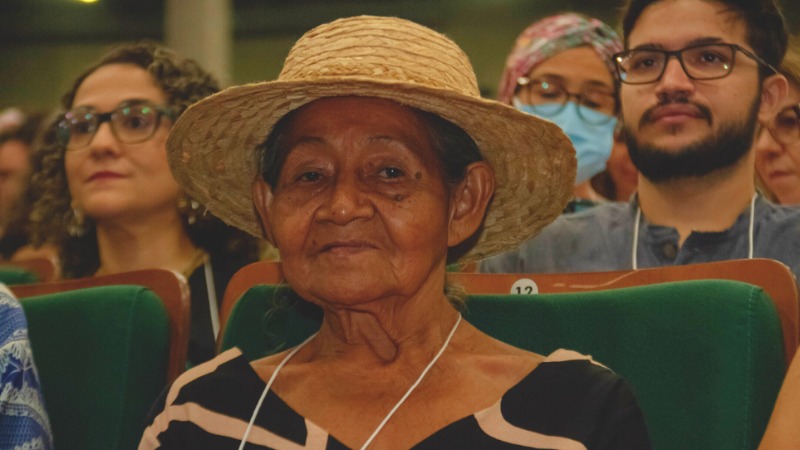
Known as one of the most important cultural agents in Mato Grosso do Sul, Dona Catarina Ramos da Silva—Catarina Guató—is also an example of the Committee’s commitment to including historically marginalized cultural agents.
Despite her extensive career, Catarina revealed that in the village of Uberaba—located on Ínsua Island, in the northwestern region of Corumbá, where she lives—state support related to grant applications is scarce. “It’s different—it’s really great to receive this support from the Comitê de Cultura—because here we end up doing everything pretty much on our own and don’t know how to handle certain things. As the saying goes: we always have to find our own way. And with this support, the path becomes less arduous for those of us who aren’t in the center, like the people in the capital,” she noted.
Facing difficulties in structuring her projects, Dona Catarina received personalized and comprehensive technical guidance from the team. The support spanned from the initial concept through the submission of proposals, ensuring compliance with all technical requirements. As a result, she was able to successfully submit applications for three calls for proposals—an achievement that underscores the importance of guidance tailored to the needs of each applicant. “I was so happy. I have a dream—which I’ve already told you about—to open my Catarina Guató Institute here, to help people who want to develop artistically and find their path in life. I believe that if there were more support here, like the kind offered by this call for proposals, I would have already succeeded,” she shared.
Despite the challenges, Catarina remains steadfast in her confidence in the future. “Everything worked out, thank God. And I have this bigger dream that I’m going to pursue—and I have faith that I’ll achieve it—to establish the Institute here, especially to help women and children,” she concluded.
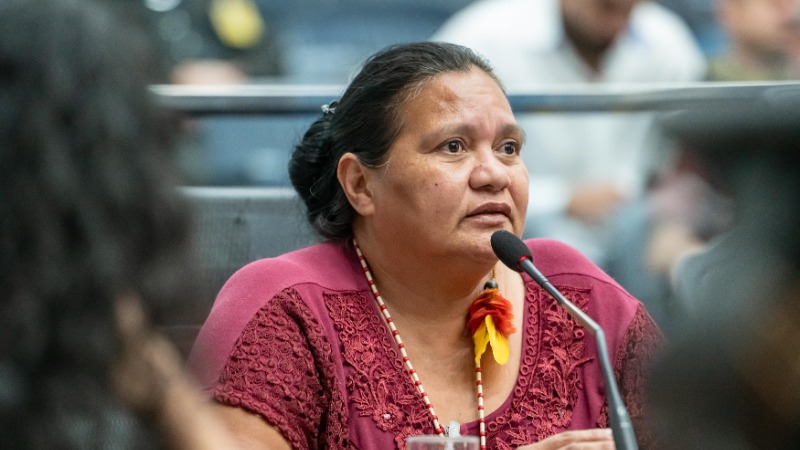
Cultural producer Suzie Guarani, a representative of the Kaguateka Collective—made up of Indigenous women from Campo Grande—also benefited from the technical assistance. Participating in the Aldir Blanc Law grant programs for the first time, she reported that the support from theComitê de Cultura was decisive in getting her projects approved. “It was very important for us because we had absolutely no infrastructure. It was almost crazy to think about how to work with Indigenous communities without a computer, without materials, and without knowing how to write a project proposal,” she said. “We were very warmly welcomed by our state’s Comitê de Cultura; we received all the technical assistance we needed, and that made all the difference.”
Suzie had two projects approved, focused on preserving the culture and promoting the autonomy of Indigenous women in the urban villages of Campo Grande. One of them, in the audiovisual field, involves producing a documentary featuring representatives of different ethnic groups in the city—such as women artisans and Indigenous female leaders.
She also highlighted the importance of ongoing, personalized guidance for the collective’s unprecedented success in applying for public cultural grants: “Everything was very well written and very well advised. We were among the top-ranked applicants. Now we’re purchasing the materials and setting up the workshops to be held in the villages. I’m very grateful. If it weren’t for this support, we might not have been able to do it,” she added.
EXPANDED TRAINING
In addition to individualized support, Propulsão Cultural hosted a series of online workshops to train a broader audience. The sessions covered topics such as the PNAB, project development, and portfolio creation, garnering hundreds of views. An in-person help desk was also set up at the Casa de Cultura in Campo Grande to answer questions.
Despite this success, the Committee faced major challenges, such as the suspension of municipal calls for proposals in Campo Grande, which negatively impacted several applicants and delayed the implementation of artistic and cultural projects. Looking ahead, the plan is to intensify monitoring of projects under review and expand the operational team through partnerships with the Mato Grosso do Sul Secretariat of Citizenship (SEC) and the Federal Institute of Mato Grosso do Sul (IFMS).