
Children's Day During the Recovery: Yvu Verá Celebrates Culture and Childhood and Raises Awareness About the Future of Indigenous Peoples
The Mato Grosso do Sul Comitê de Cultural (CCMS), a supporter of the initiative, followed the festive activities in the region
Children’s Day was a celebration of festivity, culture, and resistance at the Yvu Verá resettlement, one of ten located in the Dourados (MS) region. With support from the Mato Grosso do Sul Comitê de Cultural (CCMS), the local community, and institutions such as IFMS, the celebration took place at Casa de Reza Oga Pysy, led by Nhandesy Claudiene.
During the event, which featured bouncy castles, cultural performances, and the distribution of toys, residents and supporters highlighted the importance of promoting initiatives that value Indigenous childhoods and strengthen cultural ties.
Since 2016, Yvu Verá has faced attacks by private security guards, farmers, and police forces. Even under pressure, the community has maintained spaces for spiritual and cultural gathering, such as the prayer house that hosted the celebration.
PROTECTION OF INDIGENOUS CULTURE
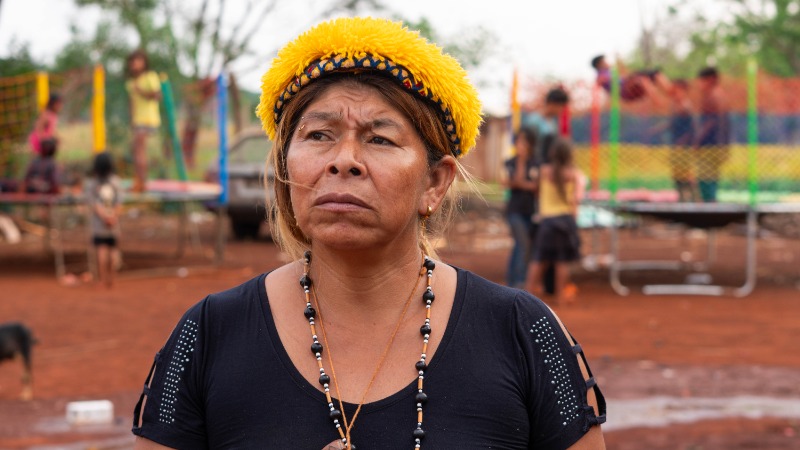
Despite the festive atmosphere, the event also served as a platform for speaking out. Nhandesy Claudiene, who oversees the House of Prayer, called for support to ensure the safety of the space, which has been the target of religiously motivated attacks and destruction: “Other houses of prayer have been burned down. We need cameras and lighting. When the wind blows hard, everything gets destroyed. We need solar panels. It’s to protect the space for the children and for our culture. I thank everyone who has helped, but it’s still difficult to keep the project going,” Nhandesy warned.
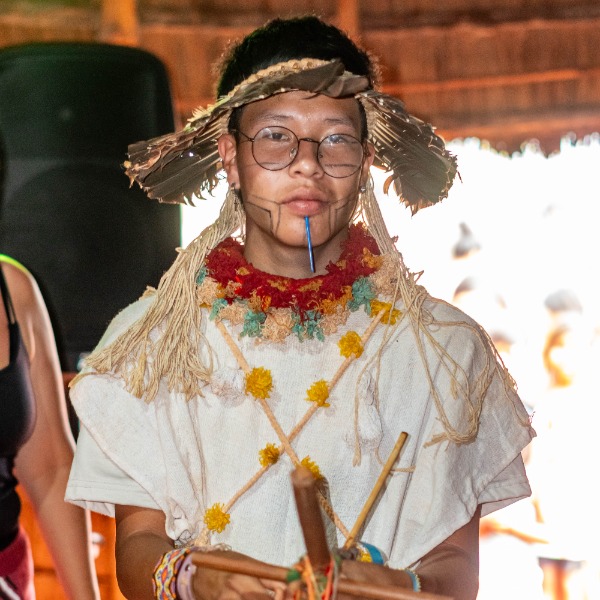
Young Anderson, son of Nhandesy Claudiene, participated in the cultural parade representing the Guarani Kaiowá youth. He celebrated the event as a way to preserve culture and combat social vulnerability:
“I want to thank everyone who supported the prayer house. They brought toys, bouncy castles, and all sorts of things for the children. That’s very rare. They value Indigenous culture. There was a parade today, and I’m very happy. I’m one of my mother’s closest supporters—her right-hand man. We started this project to get the children off the streets. We often see children smoking and drinking, and that’s wrong. We want them inside the prayer house, learning.”
ART AND CULTURE AT THE GRASSROOTS LEVEL
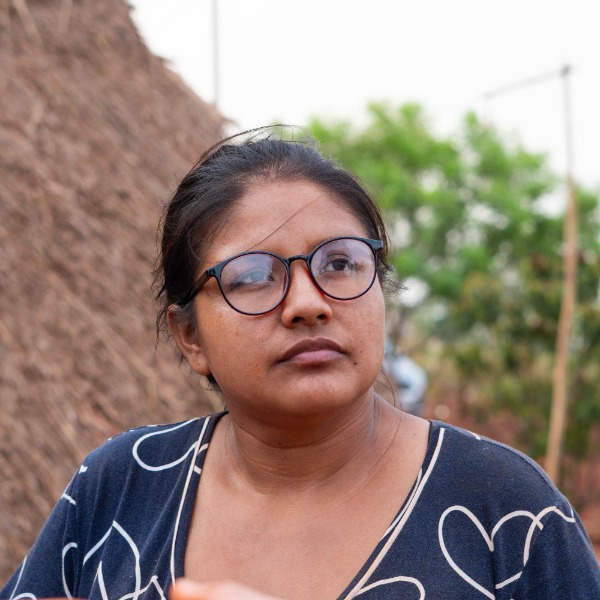
Jade Ribeiro, a member of Koa kuera—a collective of Guarani Kaiowá Indigenous women working in audiovisual media—and a theater teacher in the community, spoke about the role of cultural initiatives in empowering Indigenous children in the face of a society that, according to her, still marginalizes Indigenous peoples: “The purpose of these initiatives in our territories is for our children—who are our foundation—to gain strength and autonomy to speak about our culture. To teach them that the outside world doesn’t view us favorably. So, Koa kuera has been instilling this sense of self-worth, so that they can speak out there without being ashamed of who they are.”
She explained that the Oga Pysy House of Prayer is a central hub of knowledge: “Oga Pysy is everyone’s great house. It is a source of wisdom for the children, so they can receive traditional knowledge and strengthen our culture. The activities here are designed for Guarani, Terena, and Kaiowá children.”
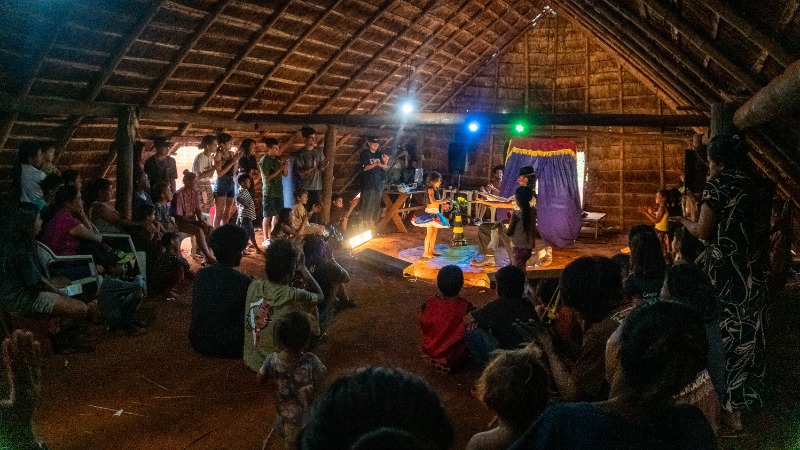
Jade also commented on the importance of institutional partnerships: “The IFMS has been our long-standing partner, and now we have the Comitê de Cultura. We need to talk about our culture. People need to know that we’re here, resisting, maintaining our traditions, and facing challenges,” she added.
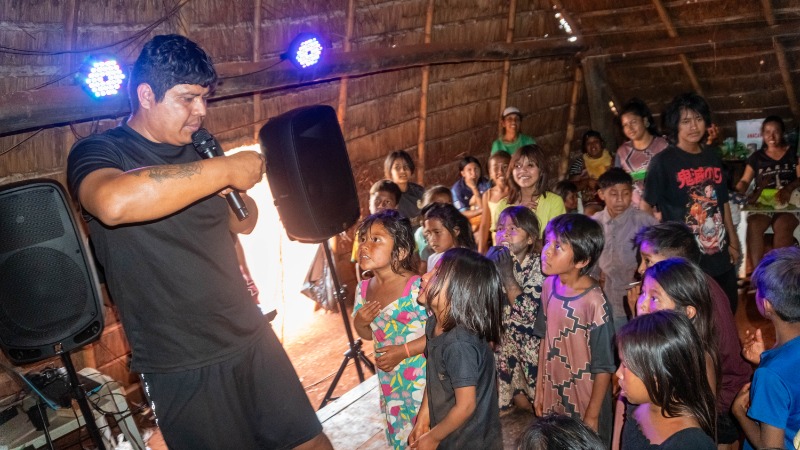
Bruno Veron, known as Bruno VN, a member of Brô MC’s—Brazil’s first Indigenous rap group—was one of the central figures of the program. In addition to hosting the event and raffling off toys, he emphasized the importance of art as a tool of resistance: “Holding this event here on our territory, bringing joy to the kids, is really awesome. Brô is always giving voice to the resistance and the struggle of the Guarani Kaiowá people. Being here today brings me immense joy.”
BRIDGE OF LISTENING
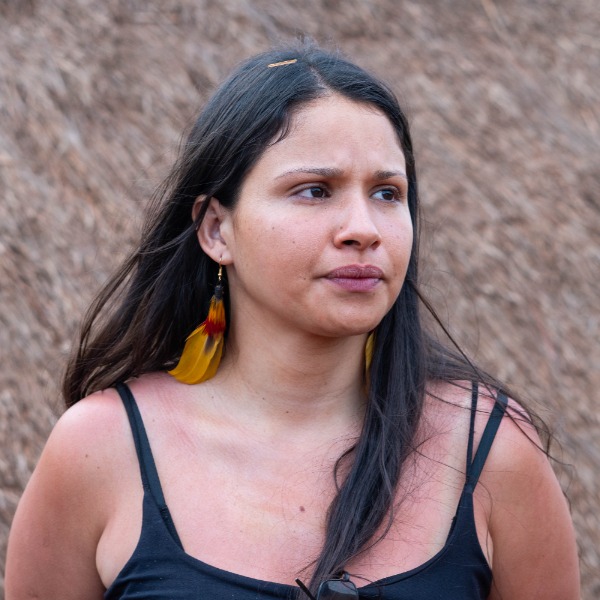
Miguela Peralta, the territorial cultural officer in Ponta Porã, emphasized the importance of listening directly to Indigenous leaders so that public policies truly meet local needs: “We have a jam-packed program featuring artists from our community. We’re so happy about this moment. We thank everyone who helped make today a special day for the children, because they truly deserve everything we can offer them.”
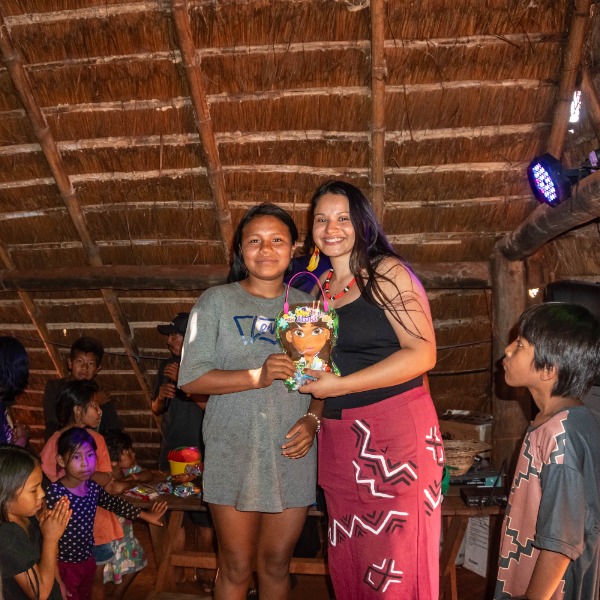
For Miguela, the presence of institutions in the territory marks a shift in the relationship between government authorities and Indigenous peoples: “Relationships are like a bridge. And often, we’re the only ones crossing that bridge. It’s really great to have you here to transform this relationship and make it a much closer one. Because we need you to be here, to listen to the community, and to understand what it needs. Only through genuine and active listening will we be able to meet the community’s needs,” she said.
SUPPORT AND PARTNERSHIPS
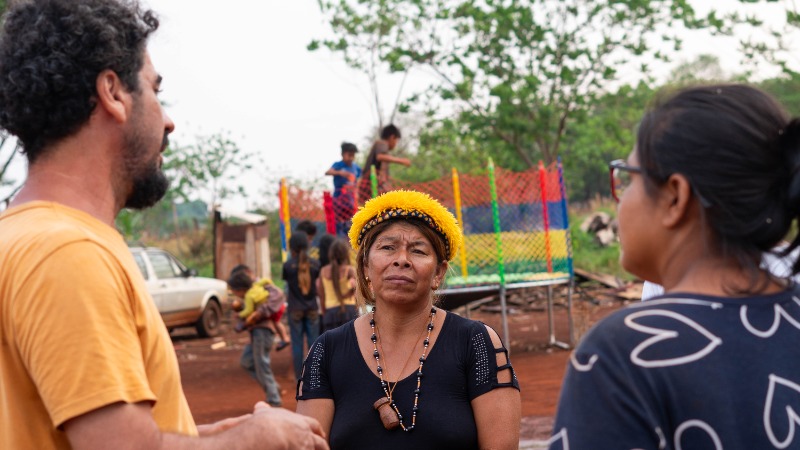
Present at the artistic and cultural event, Anderson Lima, president of the public interest organization Flor & Espinho—which organizes the CCMS in the state—celebrated the symbolic power of the territory. Speaking with Nhandesy Claudiene, he stated: “Thank you very much for welcoming us here to your territory; we came here with the intention of contributing,” Lima told Claudiene at the entrance to the Casa de Reza Oga Pysy, shortly before the cultural performances began.
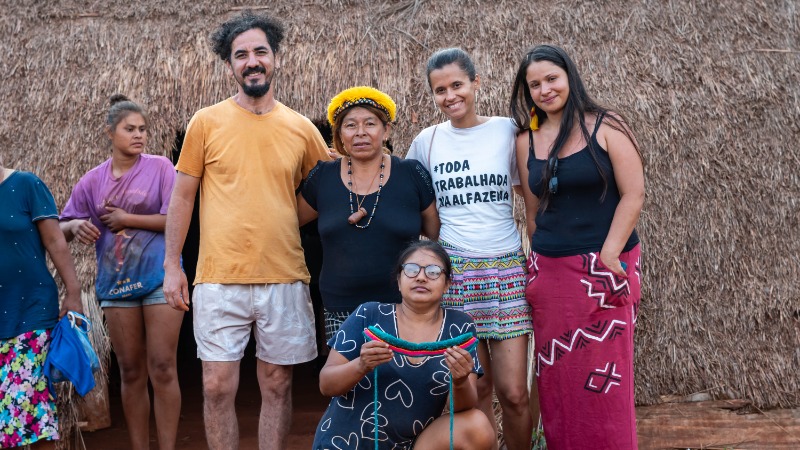
Representatives from the Federal Institute of Mato Grosso do Sul (IFMS) also participated in the event, through the Center for Afro-Brazilian and Indigenous Studies (NEABI) and the Conexões Student Association, both from the Dourados campus.
Mari Fernanda, coordinator of NEABI, emphasized that being present in the community is part of the commitment to valuing ethnic identities: “I currently coordinate NEABI at IFMS Dourados. It is an organization that promotes teaching, research, and outreach activities focused on ethnic and racial identities and relations. I am here with Fernanda, president of the Conexões Student Union. Together, we organized this event to bring a little more joy to the children here around us. We’re aware of this entire struggle—this indigenous resistance—so why not take advantage of Children’s Day to make a difference in the lives of some of these children?”
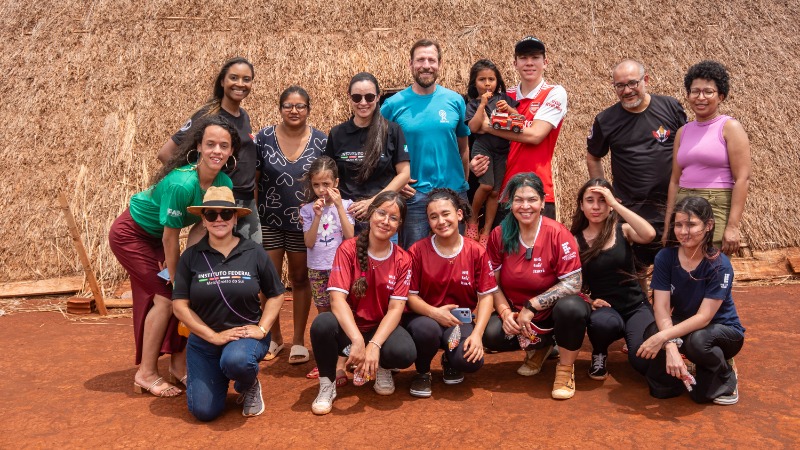
Fernanda, from Grêmio, noted that the drive was organized in partnership with the center: “This week we made a donation in partnership with NEABI, collecting toys to give to the children in this Indigenous village and the other one, Yvu Verá II.”
Mari added an invitation: “It’s a great joy for us to be here today. We believe you, too, can make a difference by donating a little of your time or a toy to the people who live here.”
The young leaders from IFMS celebrated by thanking the people who donated the toys. “Both staff members and students. Your collaboration ensured the children’s happiness today.”
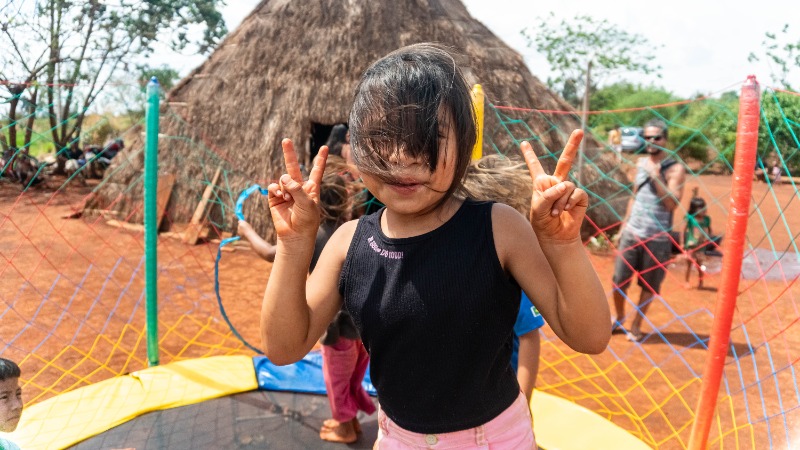
The celebration, which began at 9 a.m. under the intense sun, ended around 5 p.m. with Tekoha being drenched by rain.
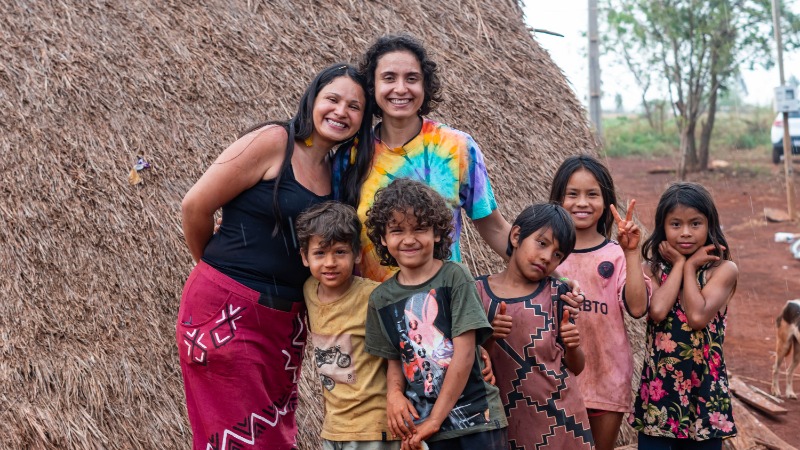
Thus, at Retomada Yvu Verá, childhood is a political and cultural act. And every toy, every song, and every prayer recited on this day was also a gesture of struggle and affirmation of identity.
See the complete photo coverage of Children’s Day, filled with cultural attractions at the Yvu Verá Reclaimed Land: https://drive.google.com/drive/folders/1SwoNazPp3AeQWym2yVsQo4F6qXKHw01Z?usp=sharing