
Aflora Project Guides the Formation of an Association of Indigenous Firefighters
Technical assistance provided in the village of Taunay Ipegue, in Aquidauana, helped draft the bylaws for an organization composed of 25 firefighters


On November 29, 2025, the Aflora Project provided technical assistance for the drafting of the bylaws of the association of indigenous firefighters from the Taunay Ipegue Village in Aquidauana (MS). The initiative was carried out by the non-profit organization Flor e Espinho (Oscip), using funds from a parliamentary amendment proposed by Federal Representative Camila Jara (PT-MS).
The association is an initiative of the Terena indigenous firefighters who work to combat forest fires in the territory. Formalizing the entity aims to expand fundraising opportunities and strengthen the work carried out by the group.
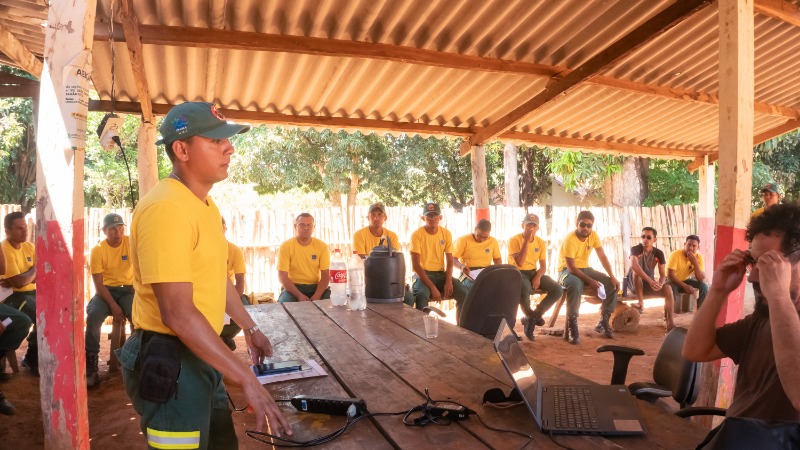
Ronaldo Constantino, head of the Taunay Ipegue Brigade, stated that the creation of the association is a goal the firefighters have been pursuing for years.
Today is a very important moment for us here in the brigade, right? Another goal being achieved. [...] Today, our association of Indigenous firefighters in the Taunay Ipegue territory is being formalized, right? We’re very happy because this is a major achievement for us; it will greatly help advance our work here and aid in fundraising.
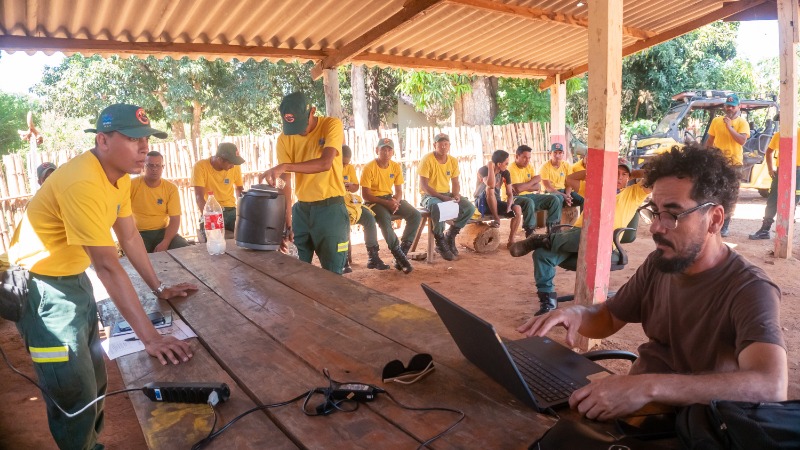
During the consultation, Anderson Lima, president of the Oscip “Flor e Espinho,” explained that organizing associations allows groups to seek funding through public calls for proposals and congressional appropriations.
Once you have your CNPJ (Corporate Taxpayer ID) set up, you can even go there, talk to the representative, explain your situation, right? And pursue that avenue—which is a source of funding—namely, parliamentary amendments.
According to Anderson, the Aflora Project includes initiatives in 22 municipalities in Mato Grosso do Sul. In some areas, the work begins with guidance on the importance of collective organization. In the village of Taunay Ipegue, the process has progressed to the drafting of the bylaws.
The president of the Oscip also explained that fundraising requires continuity, since funding has deadlines and depends on new efforts to secure support after projects are implemented.
WOMEN ON THE FRONT LINES
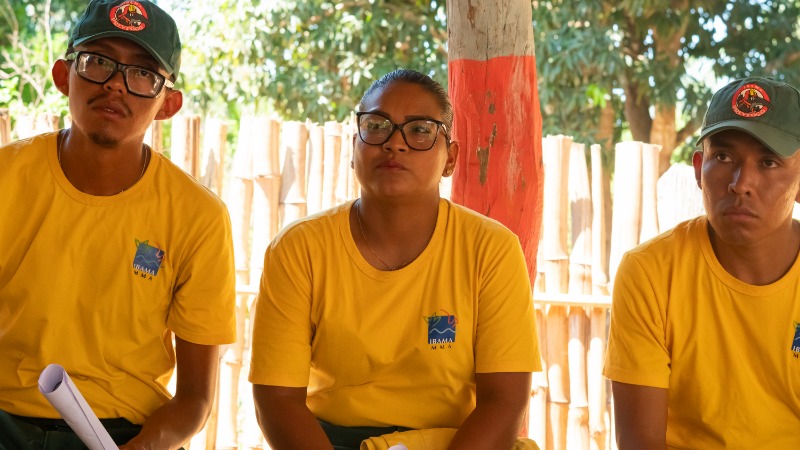
Among the 25 members of the brigade, Neudineis Felix is the only woman. In her first term on the team, she is actively involved in direct firefighting. For her, the challenge of fighting fires is compounded by the challenge of being a woman on the front lines.
I believe that my current position as a firefighter has indeed motivated many women to want a place on the team, because it’s not easy to be on the front lines of firefighting, but I believe I’m also inspiring other women who want to participate.
For Neudineis, the association can also increase women’s participation in the organization.
Formalizing the association will greatly benefit women; it will spread the word to other women. And I also believe that being part of the association will inspire other women to want to join as well.